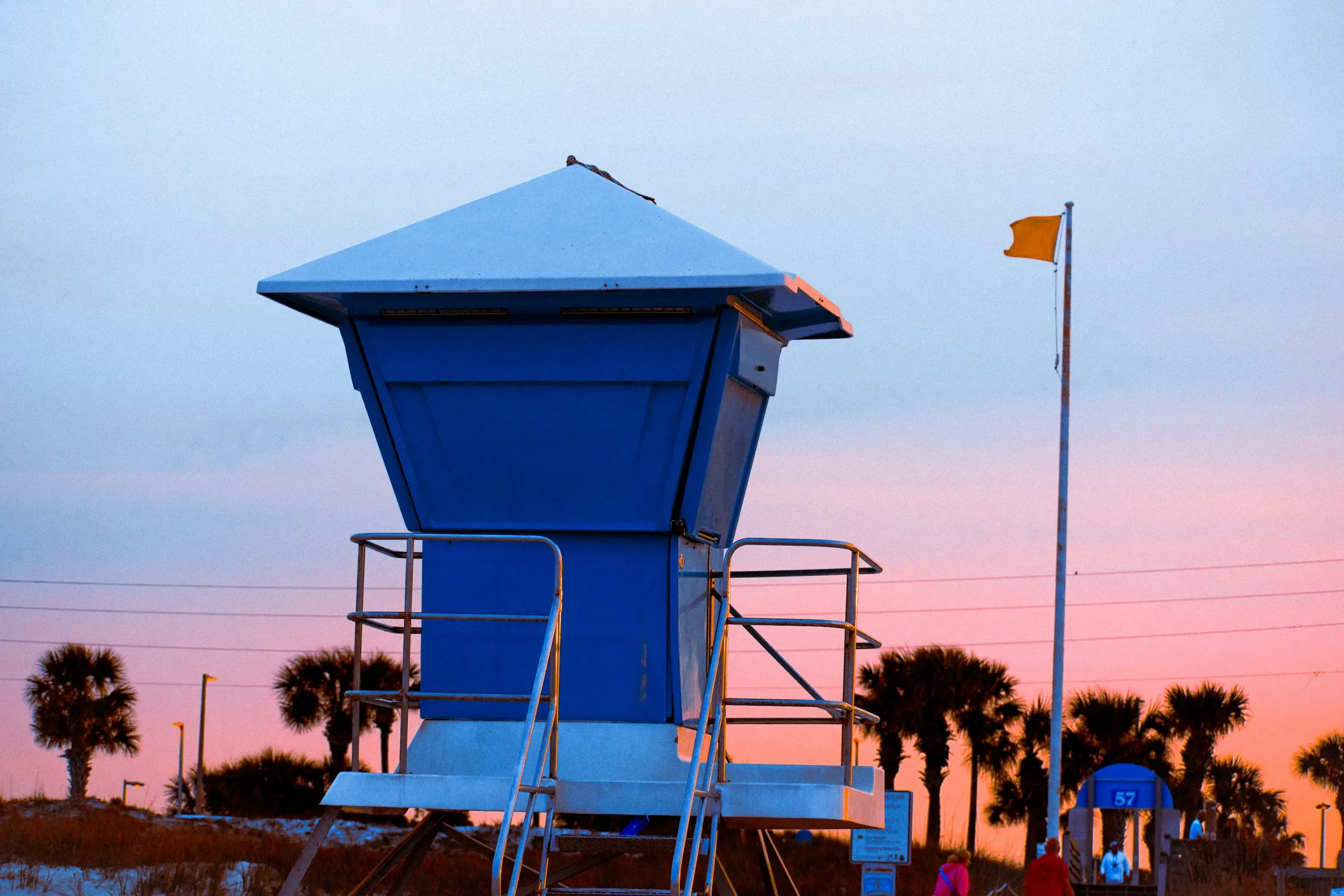
A blue lifeguard tower with a flag on the beach
Beaches

Panama City Beach flags and beach safety

Five flags tell you how dangerous the Gulf is on the day. Under two red flags the water is closed, and going in can cost $500 the first time. Lifeguards are stationed only at the city pier from April and at two more beaches in summer. On the rest of the city's beach, a patrol moves along the sand, but nobody watches one spot.

What the flags mean Current flag (Visit Panama City Beach)
Checked November 1, 2026Text PCBFLAGS to 888777Double red: $500

Panama City Beach · Photo: Simon Ray / Unsplash · Credits

The short answer

Before you go in

Do these four checks on the day you swim. The flag can change during the day, so look again before you go back in.

  1. Look at the flagWhat each flag means
  2. Check the rip current riskNational Weather Service beach forecast
  3. Swim where a lifeguard is watchingWhere and when lifeguards are on duty
  4. Stay out under double red flagsThe fines for going in

If you hear thunder, get out of the water and into a safe building or a car. Beach picnic shelters are not safe. Wait 30 minutes after the last thunder before you go back. Source: National Weather Service: lightning safety outdoors (checked November 2, 2026).

If a current pulls you out · Water quality · Jellyfish and other marine life

What the flags mean

Green
Low hazard. Calm conditions, but still take care
Yellow
Medium hazard: moderate surf or currents
Red
High hazard: strong surf or strong currents
Double red
The water is closed to the public. Going in can be fined
Purple
Dangerous marine life, such as jellyfish
No flag
Not a sign that the water is safe

Text PCBFLAGS to 888777 to get the day's flag by text message. The National Weather Service's beach forecast for the area shows the current rip current risk. A single red flag doesn't close the water, but it isn't a go-ahead: at high risk, the Weather Service warns that rip currents are life-threatening to anyone entering the surf, even very strong swimmers. Even at low risk, rip currents can form near piers and jetties.

Rip current risk today

Sources: Visit Panama City Beach: beach safety, National Weather Service Tallahassee: beach forecast, National Weather Service: rip current questions and answers (checked November 2, 2026)

Double red flags

Fines for going in under double red flags

When two red flags fly, you may not go into the Gulf or stay in it. The same applies when the police, code enforcement or fire rescue tell you to get out of the water. The city and Bay County each fine it in their own code.

Visit Panama City Beach's safety page describes a verbal warning for the first time. The city code doesn't: it starts at $500.

Sources: City of Panama City Beach code, chapter 7, section 7-12; Bay County code, chapter 5, sections 5-84 and 5-90 and section 1-6.

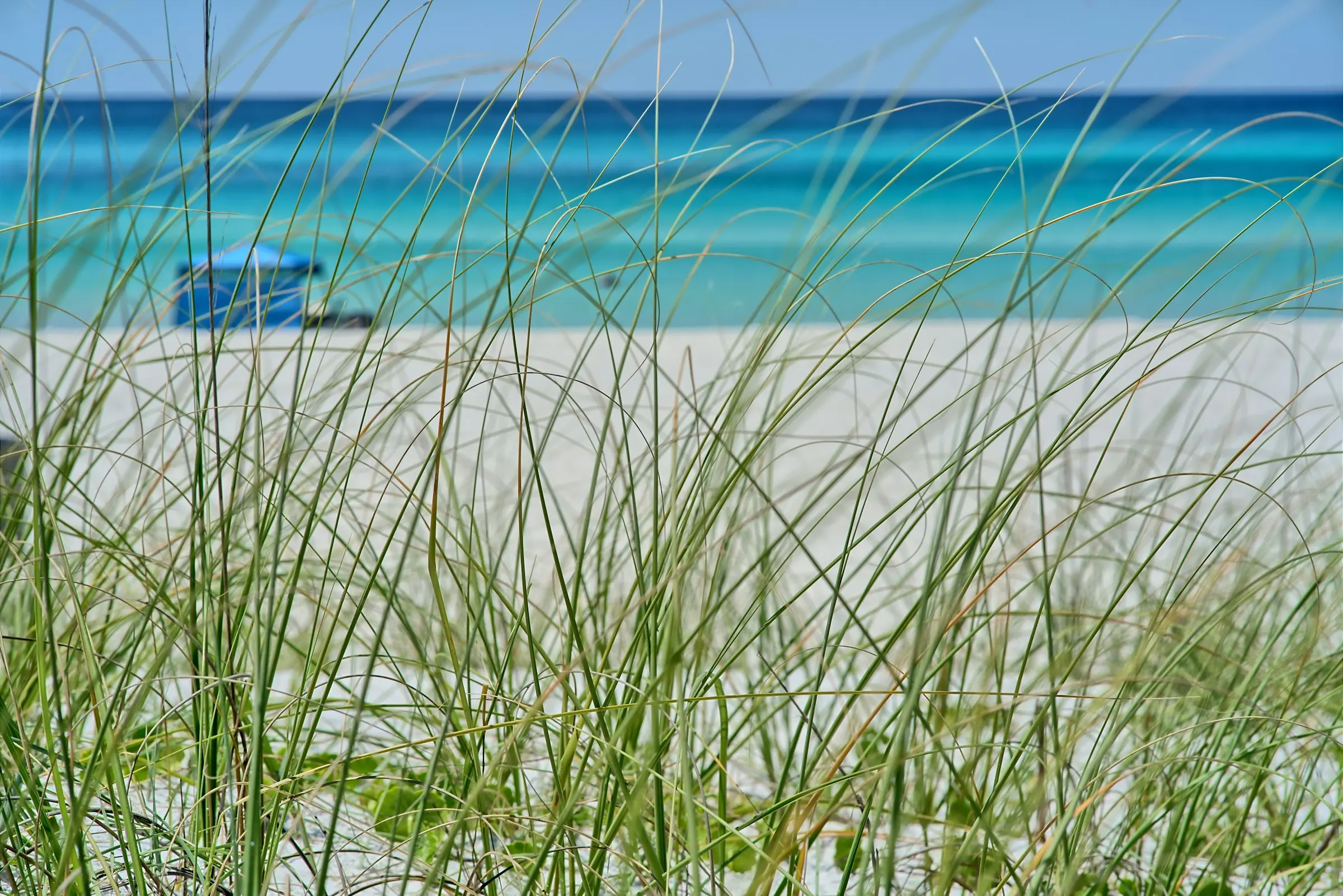
Dune grass with a lifeguard stand on the beach behind it
A lifeguard stand behind the dunes in Panama City Beach.Panama City Beach · Photo: Michael Monahan / Unsplash
First time, in the city
$500 civil penalty. Half off if you don't contest it and pay within 20 days
Second time, in the city
$1,000 civil penalty. If police prosecute it instead: a first-degree misdemeanor under the code, up to $1,000 and up to 60 days in jail, or both
First time, unincorporated Bay County (outside city limits)
$500 civil penalty. Half off if you don't contest it and pay within 20 days
Again, unincorporated Bay County
Up to $500 and up to 60 days in jail, or both
Surfers
Exempt only with a leash attached to a surfboard. Boogie boards, skimboards, bellyboards and inflatables don't count
Lifeguards

Where and when someone is watching

Most of the beach has no stationed lifeguard. If you swim with children or aren't a strong swimmer, go to one of the three beaches below during their hours. Lifeguards may not be on duty in bad weather.

  • Russell-Fields City Pier (city)

    WhenApril 1 to September 30, 10 am–6 pmDetailsTwo to four lifeguards staff the east and west sides of the pier. The tourism office lists the season as April 1 to Labor Day weekend
  • M.B. Miller County Pier (county)

    WhenMay 27 to Labor Day weekend, 10 am–6 pmDetailsListed by the tourism office; Bay County calls the beach there lifeguarded
  • Rick Seltzer Park

    WhenMay 27 to Labor Day weekend, 10 am–6 pmDetailsListed by the tourism office
  • The rest of the city's beach

    When: All year, no stationed lifeguards

    Details: The city's beach safety page counts five full-time lifeguards plus part-time and seasonal staff; the city's Message From the Chief page counts 20 full-time beach safety responders. They patrol the city's beaches, mostly moving along the beach as needed

  • State parks

    WhenCamp Helen: noneDetailsSt. Andrews doesn't publish whether it has lifeguards; ask at the gate

Sources: City of Panama City Beach: beach safety (no year given), Visit Panama City Beach: beach safety (no year given), Bay County: M.B. Miller County Pier, City of Panama City Beach: Message From the Chief (no date given, checked November 2, 2026). The 2027 schedule isn't published yet.

Getting there and parking: Russell-Fields City Pier · M.B. Miller County Pier · Rick Seltzer Park

Rip currents

If a current pulls you out

A rip current is a narrow channel of water flowing away from the beach. The red flag warns of strong currents, and the National Weather Service office in Tallahassee publishes the current rip current risk for this stretch of coast.

If you are caught

  • Don't swim straight back against the current: it wears you out
  • If you can, swim parallel to the shore until you are out of it, then swim back in
  • If you can't, float, wave and shout for help

If someone else is caught

Alert a lifeguard. If there is none, call 911. From the beach, throw the person something that floats, such as a life jacket, a cooler or a beach ball, and tell them to swim parallel to the shore. Don't swim out after them: many people have drowned trying to help.

Sources: National Weather Service: rip current safety and rip current questions and answers (checked November 2, 2026)

Water quality

Bacteria tests and advisories

The Florida Department of Health tests beach water for enterococci bacteria in its Healthy Beaches program. It issues an advisory when a sample and the follow-up sample both come back poor.

When an advisory is out, the health department in Bay County advises against any water activity at that spot until the levels drop. It also says anyone with an open cut or wound, or a weak immune system, should stay out of the water. The test only measures bacteria, not rip currents or algae.

Before you swim, check the health department's site for which Bay County beaches are sampled, how often, and the latest results.

Sources: Florida Department of Health in Bay County: advisory notice (2025), water programs (checked November 2, 2026)

Florida Healthy Beaches program

Good
0–35 enterococci per 100 mL of seawater
Moderate
36–70
Poor
71 or more
Advisory
Issued when a sample and the follow-up sample both show more than 70
Jellyfish and sharks

When the purple flag flies

A purple flag means dangerous marine life in the water, such as jellyfish. We found no official numbers for jellyfish or shark encounters at Panama City Beach.

If you are stung, leave the water and tell a lifeguard. Don't pull tentacles off with bare fingers; scrape them off with the edge of a card. Don't touch jellyfish on the sand: even dead ones can sting. If the person has trouble breathing, feels faint or has chest pain, call 911 or the Florida Poison Information Center at 1-800-222-1222.

Source: Florida Poison Information Center Network: marine stings (PDF) (no date given, checked November 2, 2026)

The water is warmest from June to September, at 82 °F or more, and coldest in January and February, at around 60 °F. These are our own averages from NOAA's sensor at the city pier, 2013–2025; month by month: water temperature.

Beaches, access and rules